Self-blame and “It wasn’t your fault”
Anxious PeopleSelf-blame and “It wasn’t your fault” is a recurring moral and emotional pattern in the novel: people take responsibility for losses they could not control, while institutions and other people sometimes use the language of responsibility to shift blame onto those least able to bear it. The pattern converges in a four-word letter kept unopened for ten years. Its eventual message does not undo what happened, but gives a person living with guilt a way to hear the loss differently.
Blame, responsibility, and moral hazard
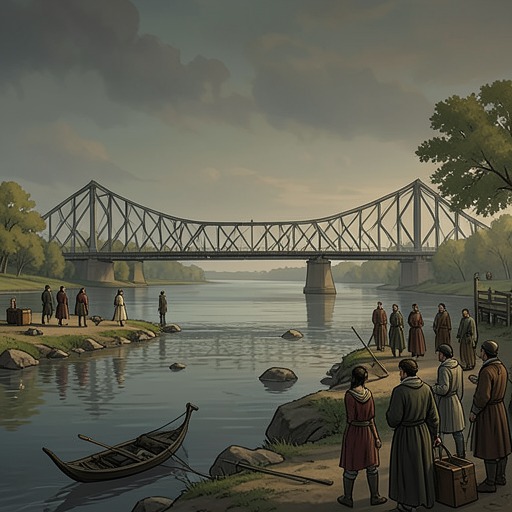
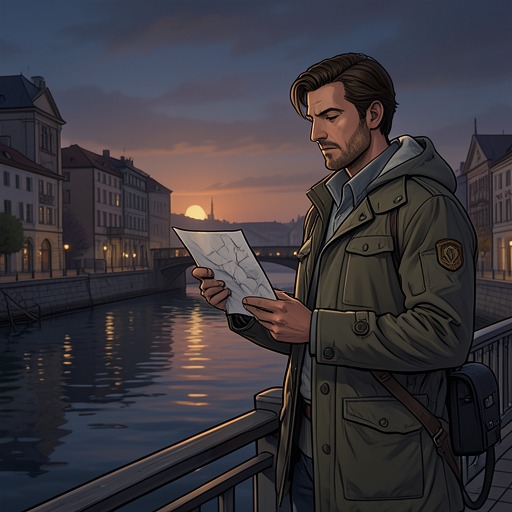
The novel first frames misplaced blame through the Man on the bridge and the banking term moral hazard. After entrusting his savings to a bank, he uses the supposedly secure investments as security for loans, then takes out further loans to pay the old ones. When the financial crisis wipes out his savings and leaves him with a mountain of debt, the bank insists that he should have known the risks. Seeking a loan from another bank to save his business and home, he explains that he has two children. A bank employee refuses the loan and describes him as the party left exposed when the bank protects itself from the consequences of its own actions. His protest, “But it isn’t my fault that they lost all my money!” makes the conflict explicit: the man understands that he has suffered a loss, but the system recasts that loss as his responsibility.
That account gives the novel a vocabulary for the more intimate forms of blame that follow. Responsibility can be real, but it can also be assigned by the powerful to someone with fewer choices. The distinction matters when characters describe their own wrongdoing: an explanation may disclose fear or desperation without erasing the consequences for others.
A child inherits an adult’s excuse
The Bank robber learns an early version of this contradiction from her mother. Before Christmas Eve, the seven-year-old sells Christmas magazine editions after school for a month and gives the money to her mother so that the family can buy food. Her mother, crying and intoxicated, clings to her and says, “Please don’t be upset with me, don’t shout at me, it wasn’t actually my fault.” She then adds, “You shouldn’t have given me the money.” The child does not immediately understand the words, but slowly connects them to the money she had earned for Christmas. The scene makes the mother’s plea both an admission of harm and an attempt to displace responsibility onto the child who trusted her.
The Bank robber remembers this episode years later, not simply as something terrible but as a source of confusion: she still cannot hate her mother, and still does not feel that it was her mother’s fault. The memory helps explain why an appeal to circumstances can persist even when the injury is plain. It also establishes a family pattern in which love complicates judgment rather than clearing the question of who caused harm.
Witnessing the bridge and carrying guilt
The bridge connects several people who respond to the Man on the bridge’s death in different ways. Estelle recalls that she had been smoking on her balcony, which looked out toward the bridge. When Knut called her inside to watch something on television, she left her cigarette burning in the ashtray. She later learned that the man climbed onto the railing and jumped during that interval, and stopped smoking on the balcony. When she tells the others, Julia answers, “Oh, Estelle, it wasn’t your fault that someone jumped off a bridge,” and Anna-Lena adds, “It wasn’t the bridge’s fault, either.” The exchange sets Estelle’s private guilt against the obvious limits of her responsibility: the timing of an ordinary interruption becomes, in memory, an occasion to imagine that she might have acted differently.
Zara’s guilt begins as a more direct act of witnessing, but it too grows around what she did not do. The week after the man’s death, she sees a girl climb onto the same railing and a boy rescue her. Zara remains hidden in the darkness, shaking, until the ambulance arrives. Afterward she finds the girl’s wallet and learns her name: Nadia. She has spent the following ten years secretly following Nadia’s education and career, while watching the bridge from the balconies of apartments for sale. Zara fears returning to the bridge or approaching Nadia because she suspects that learning the truth about herself might make her the one who jumps. She also believes that she bears guilt, although she has not yet opened the letter the dead man left her.
The novel places this burden beside Nadia’s own later work. After surviving her attempt, Nadia becomes a psychologist and works with people in pain. She has never met the boy who rescued her again, and sometimes doubts whether she made him up. Her reflections on goodness and kindness turn survival outward: people may not know how heavy another person’s burden is. The novel’s insistence that people want to be good does not make guilt vanish; it shows why the desire to help and the fear of having failed can coexist.
The letter and the possibility of release
When Zara finally lets the envelope go, she is still struggling to say why she came to Nadia. She wants to explain that she arrived because of the letter, that she needs someone to read it aloud, and that she needs help not to jump after hearing it. She also wants to tell Nadia that she watched the boy save her and has spent every day since thinking about the difference between people. Instead, she manages only, “Nadia… you… I…” Nadia opens the envelope carefully and finds a handwritten note, ten years old and four words long.
The narration identifies the message as the last thing the Man on the bridge ever told anyone: “It wasn’t your fault.” Zara releases the letter onto the water and walks toward a car where Lennart is waiting. The gesture does not erase her long silence or settle every question about responsibility. Its significance is that the message reaches her at last, after years in which the unopened envelope has stood between her and the possibility of hearing it. She has not been able to make herself read the words alone; Nadia’s presence makes the moment possible.
Care, grief, and what can be saved
The novel also presents the slow, practical limits of responsibility through Jack’s memory of his mother. When he asks how she could sit beside dying people without saving them, she answers with the image of eating an elephant one bit at a time. She tells him that people cannot change the world, or often even change one another, but can help when the opportunity comes: “We save those we can.” Jack remembers this teaching alongside losses he could not prevent, including the Man on the bridge’s death and his inability to save his sister from addiction. The maxim does not promise rescue in every case; it offers a way to keep acting without treating every failure as proof of personal worthlessness.
That ethic continues in Nadia’s annual summer camp for children who have lost a family member to suicide. The camp’s purpose is to help them understand that they are not alone with guilt, shame, and silence. In the final scene, Zara has donated money to the charity that funds it. Her decision links the letter’s message to material help for others: the story does not claim that a sentence can repair every loss, but shows how recognition and companionship may make a next step possible. Across the bank, the family, the bridge, and the camp, blame narrows the world to what should have been done; care begins by acknowledging what could not be controlled and helping with what can still be done.